
One of my goals for this year was to run a full marathon. I’ve run a half-marathon a half-dozen times in the past, but a full one always felt out of reach. In the past year, all that changed, and I finally did it!
I don’t think that there was really anything special or unique about how I went from “no way” to “yes way”. I was already in love with running, so spending hours preparing each week was a delight, not a chore. Still, outside of being dedicated to the process, changing my diet was probably the biggest difference maker. Oh, and slowing down my pace (went from 8ish minute miles to 9ish minute miles). After that, I just had to be thoughtful about building up to running 4 hours straight. Here is how I did it.
Planning
The word “plan” might be a bit too strong. I’m nearing 46 years old, now, and for years, the idea of running a lot further than 10 miles seemed super hard. But about a year ago, before I even thought about running longer, I changed my diet significantly and started losing weight (see the Nutrition section for more). Seemingly overnight, long distances started to get A LOT easier and a marathon felt like a logical next step instead of a lunatic’s fantasy.
Up until this point, I had been running consistently for fifteen years, typically getting out 2–3 times during the weekdays with a longer run on the weekend. For much of my running career, a long run on the weekends meant 6–7 miles, but over the past year, those got to be my shortest runs and my longer ones pushed over 12 miles. That’s when I knew it was my time.
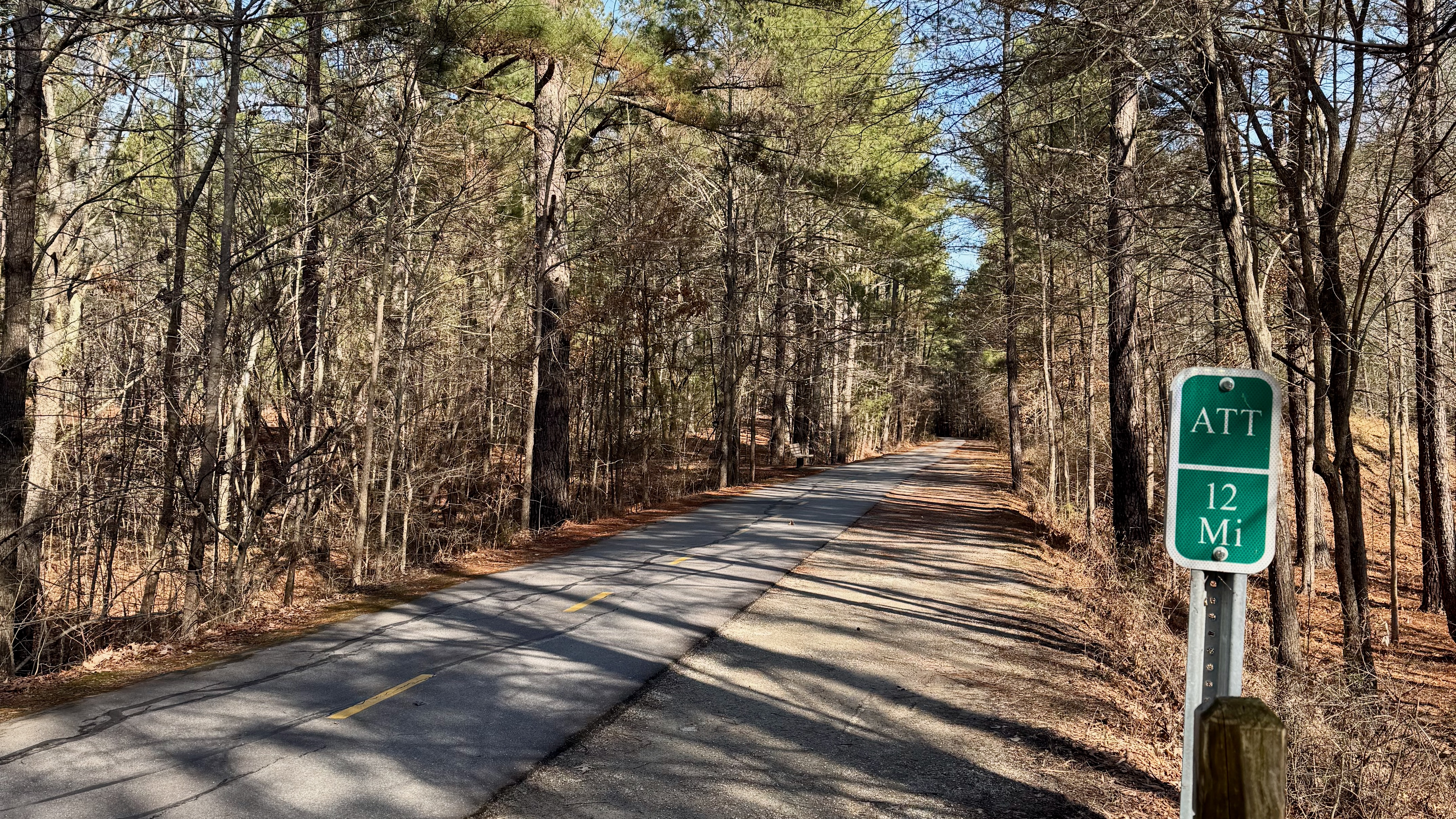
Fortunately, there was a race planned for early 2025 that was right outside my doorstep: the American Tobacco Trail (ATT) Marathon
Gear: you need more than just good shoes
The best thing about running is that you need very little in terms of gear to do it. However, I would consider these items essential to increasing mileage:
- Shoes: yeah this is obvious, but good shoes are critical. I’ve used Mizuno Wave Riders for 15 years.
- Hydration: carrying water with me was a game changer. I use the Nathan Vaporlite vest and love it.
- Hat: keeps the sun and sweat out of my eyes. I like the Outdoor Research Swift Cap the best (or a Smartwool active beanie if it’s cold).
- Visibility: running a lot means I need to run on roads and run in the dark sometimes. I like the Amphipod Versa Light clip for seeing/being seen.
- Roller ball/foam roller: rolling out my leg muscles as a regular practice (and doing other stretching and mobility work) helps me stay connected with my body and recover better.


Training schedule: a simple four-month formula
I loosely followed a 4-month plan to increase my distance. I based it off some article I found that I can’t find again now, but here is the basic approach:
- 4 months out – increase weekly long run to 10-12 mile distance (I was already doing this for the past 6 months)
- 3 months out – increase to 13-16 mile long runs
- 2 months out – increase to 17-20 mile long runs
- 1 month out – taper back to 14-16 mile long runs
- Last week – run a 13-14 mile run one week out and then just a couple short runs (3-5 miles) leading up to race day
All throughout this stretch, I was running 2–3 times during the week in addition to the long run for distances between 6–8 miles, making my weekly totals push up well over 30 miles consistently.
It’s also worth mentioning that I also do at least one day of cycling (Peloton) and one day of strength/mobility training on non-running days too.


Nutrition: eating right is the most important thing of all
All my running happens either when I first wake up (after coffee, of course) or most often mid-morning once the kids are off to school (and after more coffee). I don’t eat before runs, because…
I started the practice of intermittent fasting 5–6 days per week about a year ago. I don’t eat before 12pm and don’t eat after 7pm. During my eating “window” I eat vegetarian and aim for lots of veg, legumes, nuts, and whole grains. Since starting this practice, I’ve lost 15–20 pounds and feel noticeably lighter on my feet.
As my distances started to increase, I also started to consume misc nutritional gels and gummies during long runs, typically having a packet every 30–45 minutes. I’ve also been adding a packet of electrolyte drink mix to my hydration pack as well. All of this has helped with energy during the run and less tiredness in the hours following.
As I mentioned earlier, these nutritional changes made a huge impact on how long and far I could run.

Race day
The plan was to run in the 2025 American Tobacco Trail Marathon, but there was a letdown the day before, as the full marathon end time was changed from 2pm to 11am due to stormy weather that was due to arrive. In other words, if you couldn’t do the marathon in 4 hours or less, you wouldn’t finish officially. All the police, water stations, and finish line were to be packed up by 11am. We were given the option to defer our race entry to next year, which I did, and then went ahead and ran my own version of the race anyway on mostly the same course and with a bunch of the same participants.
The change in race plans actually turned out just fine and made the day a bit more relaxed. I still had everything packed and ready the night before. The original race was due to start at 7am, so I wanted to start my own version at that time as well, but was able to get up at 5:30am rather than 4:30am because I wasn’t needing to deal with parking/crowds.
I made it to my starting point (which was on the same trail, just a little south) just after 6:30 and set off soon after in the dark. “Nothing new on race day” is the oft mentioned advice, and I followed it to the letter. Sticking to my usual pre run routine of coffee and a quick warm up, and then just the standard business of one foot in front of the other for 26.2 miles.
I ended up finishing the race in 4 hours, which meant I probably could have easily run the official race before the time ran out, but it’s all good. It was great to be out on a course again with other runners and feel that group energy.


Takeaways
The biggest unlock for me getting to a marathon distance was losing weight. Shedding 15 pounds took me from being able to run 7-8 miles comfortably on the weekends to 11-12 miles no problem. How I lost weight should probably be a whole other post, but it was mainly a result of adopting intermittent fasting six days a week.
The other thing that made a big difference is shifting down a gear in my speed. I went from running 7:30-8:30 miles to 8:30-9:30 miles. My body told me I needed this by pulling a calf muscle on one of my training runs, which was agony. I listened and haven’t had another injury since.
Maybe the best part of running was that I still got to finish with the family cheering me on, as they came and met me for the final stretch (and actually lined up exactly at the 26.2 mile mark). So cool. I’m looking forward to doing this again next year.


Comments welcome!